
The government of Pakistan has officially approved a major enhancement in the Benazir Kafalat Program under the 8171 initiative, increasing the quarterly installment from Rs 13,500 to Rs 14,500, effective January 2026. Although the adjustment becomes active in 2026, the announcement was made in late 2026 to give beneficiaries enough time to prepare.
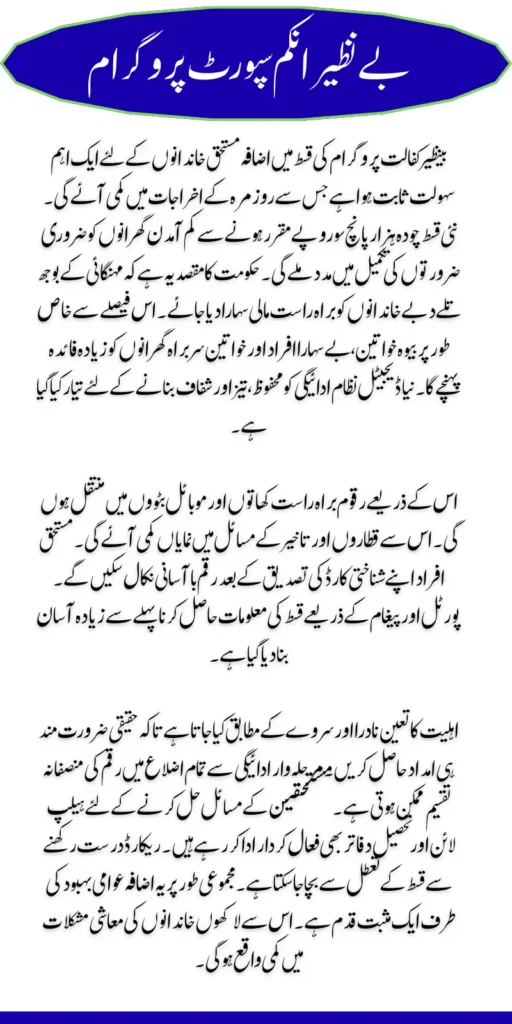
This increase aims to support low-income families who continue to struggle with rising living costs, inflation, and essential household expenses. The update applies to all active BISP and Ehsaas Kafalat beneficiaries across Pakistan, ensuring nationwide coverage in a phased rollout. According to Senator Rubina Khalid, the new payment will bring much-needed relief to millions of women-led households.
Why the Payment Has Increased for the 8171 Program
The rise to Rs 14,500 is primarily driven by inflation and higher living costs faced by families nationwide. Prices of food, utility bills, and transportation have increased sharply, making it harder for vulnerable households to manage daily needs. By adjusting the installment amount, BISP ensures that welfare support remains relevant and useful.
You can also read: Dhee Rani Program Phase 2 List
This change also reduces dependency on borrowed money and protects women-led families, especially widows and disabled individuals. Regular adjustments to social welfare programs help maintain financial stability for millions of beneficiaries. Furthermore, the government intends to keep future installments aligned with economic realities.
Key benefits of the increase include:
- Better coverage of essential food and utility expenses
- Improved financial security for low-income families
- Reduced pressure on beneficiaries caused by inflation
- More efficient welfare planning at the household level
How the 2026 Digital Payment System Works
The 2026 installment will be delivered through an upgraded digital system designed for transparency, speed, and security. This system reflects major feedback collected from previous years and aims to eliminate long-standing issues such as payment delays and biometric errors.
Under the new setup, beneficiaries will receive direct transfers into their bank accounts. Those without bank accounts may use JazzCash or Easypaisa wallets for instant withdrawals. ATMs remain available 24/7, allowing families to access their funds without inconvenience. Biometric verification is mandatory to prevent fraud and ensure funds reach the correct recipient.
Main features of the 2026 system:
- Secure bank transfer for all eligible families
- Mobile wallet accessibility for quick withdrawal
- 24-hour ATM access across all major banks
- Fraud prevention through biometric checks
Quick Facts About the Updated Installment
Below is a summary of essential program details for easy understanding:
| Detail | Information |
|---|---|
| Program Name | 8171 Benazir Kafalat Installment 2026 |
| New Installment Amount | Rs 14,500 |
| Previous Amount | Rs 13,500 |
| Effective From | January 2026 |
| Payment System | Banks, ATMs, JazzCash, Easypaisa |
| Eligibility | All active BISP/Ehsaas beneficiaries |
This structure ensures beneficiaries have complete clarity on when and how the new installment will be distributed.
How to Check Your Rs 14,500 Payment Through 8171
Beneficiaries can easily verify their eligibility and payment status using the 8171 portal or SMS service. The portal provides real-time updates on installment transfers, district schedules, and eligibility decisions. Checking payment status from both methods helps avoid mistakes and ensures information consistency.
To use the 8171 official web portal, simply enter your CNIC and complete the confirmation code. Updates usually appear within seconds. If the portal is busy due to heavy traffic, SMS verification remains a quick alternative. Sending your CNIC to 8171 from your registered SIM ensures accurate results.
Steps to check your payment:
- Visit the portal: https://8171.bisp.gov.pk
- Enter CNIC and solve captcha
- Press submit to view payment record
- Send CNIC to 8171 for SMS confirmation
- Compare both results for accuracy
Eligibility Rules for the Rs 14,500 Installment
The eligibility criteria for the new payment follow existing NSER and NADRA verification rules. Only deserving families—based on poverty score, household income, and documentation—qualify for the installment. These rules help the program remain transparent and focused on genuinely needy individuals.
You can also read: Akhuwat Microfinance Loan Scheme 2026
Women heads of households, widows, disabled persons, and low-income families receive priority. Any household with a government employee or frequent taxpayer is excluded from the program. Regularly updating your NADRA records is essential to avoid payment disruptions.
Basic eligibility requirements:
- Must hold a valid Pakistani CNIC
- Registered in the NSER database
- Not employed in a government institution
- Not a frequent taxpayer
- Household classified as low income
Districts Receiving Payment in Phase 1 (2026)
Payments will be distributed in multiple phases to avoid system overload. Phase 1 includes major districts across all four provinces. Beneficiaries living in these areas will receive the installment first, while other districts will follow in the next cycle.
The following table shows the initial districts:
| Province | Districts |
|---|---|
| Punjab | Bahawalpur, Multan, Muzaffargarh, Rahim Yar Khan, D.G. Khan |
| Sindh | Sukkur, Larkana, Dadu, Khairpur, Badin |
| Khyber Pakhtunkhwa | Peshawar, Swat, Mardan, Kohat, Bannu |
| Balochistan | Quetta, Turbat, Zhob, Lasbela |
Beneficiaries from other areas should keep checking 8171 regularly for updated schedules.
How to Receive Your Rs 14,500 Through Banks or Wallets
The 8171 program now supports both bank payments and mobile wallet withdrawals, offering beneficiaries complete flexibility. If you have a bank account, the payment will be deposited directly. Otherwise, you may use a JazzCash or Easypaisa wallet to collect the amount from agents or ATMs.
The process is simple: log in to your wallet or bank app, verify your CNIC, and select the withdrawal method. In case of ATM withdrawal, beneficiaries must provide biometric verification for security. Keeping your CNIC active and wallet updated prevents common issues.
Helpful tips:
- Use authorized agents only
- Keep SMS confirmation or receipt for record
- Ensure your CNIC matches your wallet details
- Withdraw only from secure locations
Common Problems and Their Solutions
Beneficiaries often face issues during the verification or payment process, but most of these can be resolved easily. Sometimes the portal may not load due to heavy traffic. Payments may also appear late due to batch updates from BISP. Maintaining accurate records and using your registered SIM greatly reduces errors.
If your wallet becomes inactive, visit the nearest branch for reactivation. For incorrect payment amounts or NSER issues, the BISP Tehsil Office is the best place to get immediate correction. The helpline remains available for guiding beneficiaries through technical or eligibility-related concerns.
Common issues and quick fixes:
- Portal not loading: Try after 15–20 minutes
- No SMS received: Send CNIC from the SIM linked to your CNIC
- Payment not updated: Wait 24 hours for batch refresh
- Biometric error: Try another device or visit the nearest office
You can also read: BISP Wallet SIM Distribution Start in Taunsa
Conclusion
The increase to Rs 14,500 under the 8171 2026 Program marks a significant step toward supporting Pakistan’s most vulnerable families. With a modern digital payment system, improved transparency, and expanded accessibility through banks and mobile wallets, beneficiaries can now receive their funds faster and more safely.
Updating your CNIC and checking the 8171 portal regularly helps ensure smooth payments throughout the year. This enhancement reflects the government’s commitment to strengthening social protection and easing the financial burden on millions of households.