
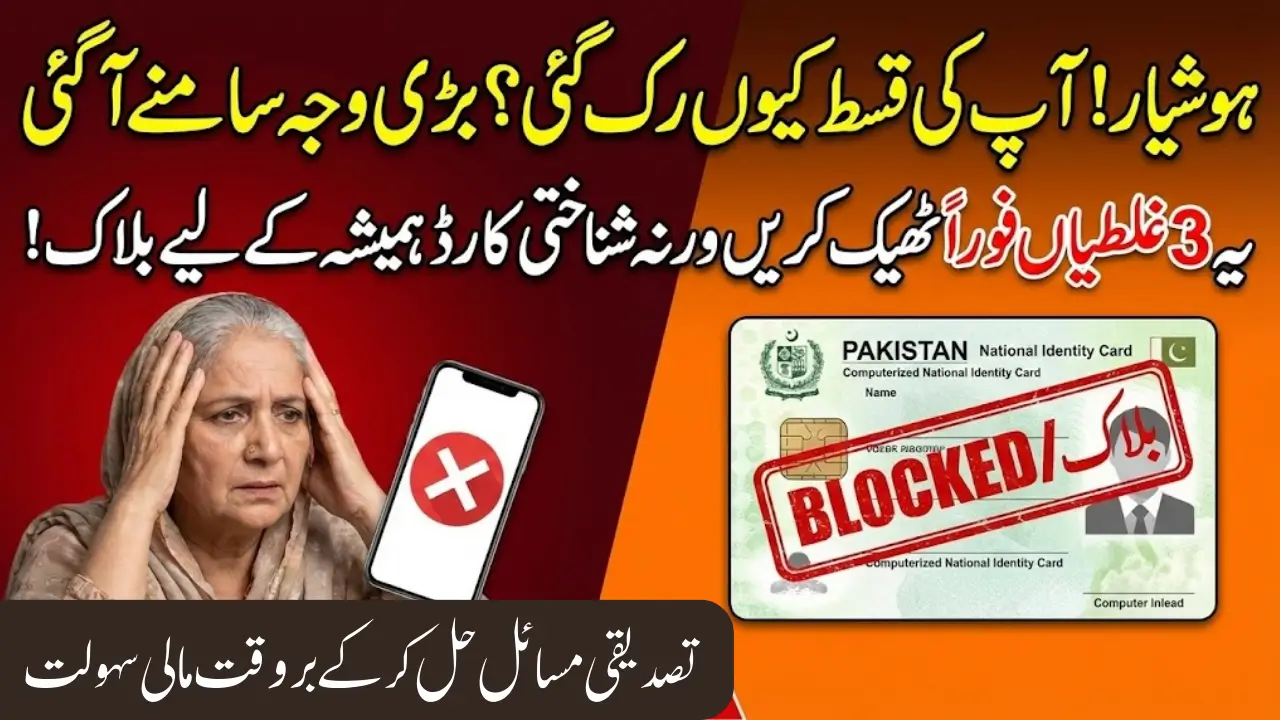
The Benazir Income Support Program (BISP) plays a crucial role in supporting low-income families across Pakistan. Despite the program’s improvements, many beneficiaries still face issues with missed payments. These delays usually occur because of verification problems, outdated information, bank complications, or system errors. Understanding how these issues arise is the first step toward resolving them quickly.

In 2025–2026, BISP strengthened its payment monitoring system to ensure smooth disbursement. Beneficiaries now have access to digital tools and multiple communication channels that allow them to check payment status instantly. By staying updated and taking timely action, families can prevent financial interruptions caused by delays.
Why Missed Payments Occur in 2025-2026
Administrative & Verification Issues
Many missed payments happen because the beneficiary’s data is incomplete or outdated. Incorrect CNIC details, wrong household information, or missing NSER verification can stop payments from being released.
Sometimes beneficiaries forget to complete mandatory surveys, which leads to temporary blockage.
Key causes include:
- Incorrect CNIC or family data
- Incomplete or missed NSER survey
- Verification pending at the local BISP office
You can also read: 8171 Incomplete Payment Fix
Banking Delays & System Glitches
Bank-related issues are also a common reason behind missed payments. Delays can happen if the linked bank account is inactive, frozen, or incorrectly registered. Sometimes ATM errors or delays in fund transfer from the bank also create confusion.
Other issues include:
- Technical errors during processing
- Server downtime during payment release
- Mismatch between CNIC and bank account details
Eligibility Criteria for BISP Payments
National Socio-Economic Registry (NSER) Requirements
Eligibility for BISP is based on poverty ranking determined through the NSER survey. Only households within the approved poverty score range qualify for financial assistance. Households must also keep their information updated during review cycles.
Special Priority Groups
Some groups receive priority under BISP due to higher vulnerability, ensuring support reaches those with the greatest need. This includes:
- Women heads of households
- Widows and separated women
- Families with elderly or disabled members
- Households with no stable income source
To maintain eligibility, beneficiaries must ensure their documentation and contact details stay updated.
Important Documents Required for Missed Payment Recovery
CNIC Verification Documents
A valid and updated CNIC is the most important document for recovering missed BISP payments. Beneficiaries must ensure that their CNIC is renewed and linked correctly with their household records.
Required CNIC-related documents may include:
- Original CNIC
- Copy of CNIC
- Family registration certificate (if needed)
Bank Account-Related Documents
If payment is linked through a bank account, beneficiaries may need to provide documentation to verify ownership or update details.
Commonly required documents:
- Bank account number
- ATM card (if applicable)
- SMS proof of previous transactions
- Bank verification slip
How to Check BISP Missed Payment Details
Using the Online Portal
The BISP portal allows beneficiaries to check missed payments with their CNIC. After entering the CNIC, the system displays recent transactions, pending payments, and verification alerts.
Steps include:
- Visit the official BISP portal
- Enter CNIC and complete verification
- View payment history and status
Checking via SMS (8171 Service)
The 8171 SMS service is the fastest way to check payment details. Beneficiaries simply send their CNIC number to 8171 and receive instant confirmation of eligibility and payment status.
Contacting Local BISP Office
Those facing repeated issues can visit the nearest BISP tehsil office. Officers assist in updating documents, resolving verification issues, and guiding beneficiaries about pending payments.
You can also read: 8171 Tracking Portal Restoration 2026
Step-by-Step Process to Recover Missed Payments
Identification of Issue
The first step is understanding why the payment was missed. Beneficiaries must check for verification errors, incorrect CNIC, bank issues, or blocked profiles.
Submission of Recovery Request
Once the issue is identified, beneficiaries visit their local BISP office with the required documents. Officers process the recovery request and guide the beneficiary regarding timelines.
General steps include:
- Submit CNIC and bank details
- Update incorrect information
- Verify identity and household data
- Wait for confirmation via SMS or portal
BISP Payment Tracker Features
Real-Time Updates
The BISP tracker is a digital tool that gives instant visibility of payment status. It helps families track payment releases and identify delays early.
Alerts & Notifications
Beneficiaries receive SMS alerts for missed payments, verification needs, or bank-related issues. This helps them take timely action and avoid future delays.
Common Issues Beneficiaries Face
Blocked or Duplicate CNIC
Sometimes payments stop because the system detects duplicate entries or outdated information. This must be corrected at a BISP office with proper documentation.
Inactive Mobile Numbers
If the registered number is inactive or incorrect, beneficiaries miss important SMS alerts. Updating contact details ensures continuous communication.
Tips to Avoid Missing Future Payments
Beneficiaries can avoid future payment delays by taking small but important steps:
- Keep CNIC updated and valid
- Ensure mobile number is active
- Complete all BISP surveys on time
- Regularly check payment status
- Visit the local office if any issue arises
Proactive steps help families maintain steady financial support.
Missed Payment Causes & Solutions
| Cause of Missed Payment | Solution |
|---|---|
| Incorrect CNIC details | Update CNIC at NADRA and BISP office |
| Inactive mobile number | Register new number with BISP |
| Bank account mismatch | Provide correct bank details |
| Missed NSER survey | Complete survey at BISP center |
| System glitch | Contact local office for manual review |
Conclusion
BISP missed payments can cause stress for low-income families, especially when financial support is urgently needed. However, with the improved system in 2025–2026, beneficiaries can easily track their payments, correct errors, and recover missed funds. By staying updated, keeping documents accurate, and checking payment status frequently, families can ensure continuous support without disruption.
You can also read: Traffic Fines in Punjab 2025
FAQs
1. How can I check BISP missed payment details?
You can check through the BISP online portal or by sending your CNIC to 8171.
2. What documents are needed for missed payment recovery?
A valid CNIC, bank details, and verification receipts are commonly required.
3. How long does it take to recover missed payments?
Recovery time depends on the issue but usually takes a few working days.
4. What if my CNIC is blocked or not recognized?
Visit the nearest BISP office to update your records and complete verification.
5. How can I avoid future missed payments?
Keep your CNIC, mobile number, and bank details updated, and complete surveys on time.