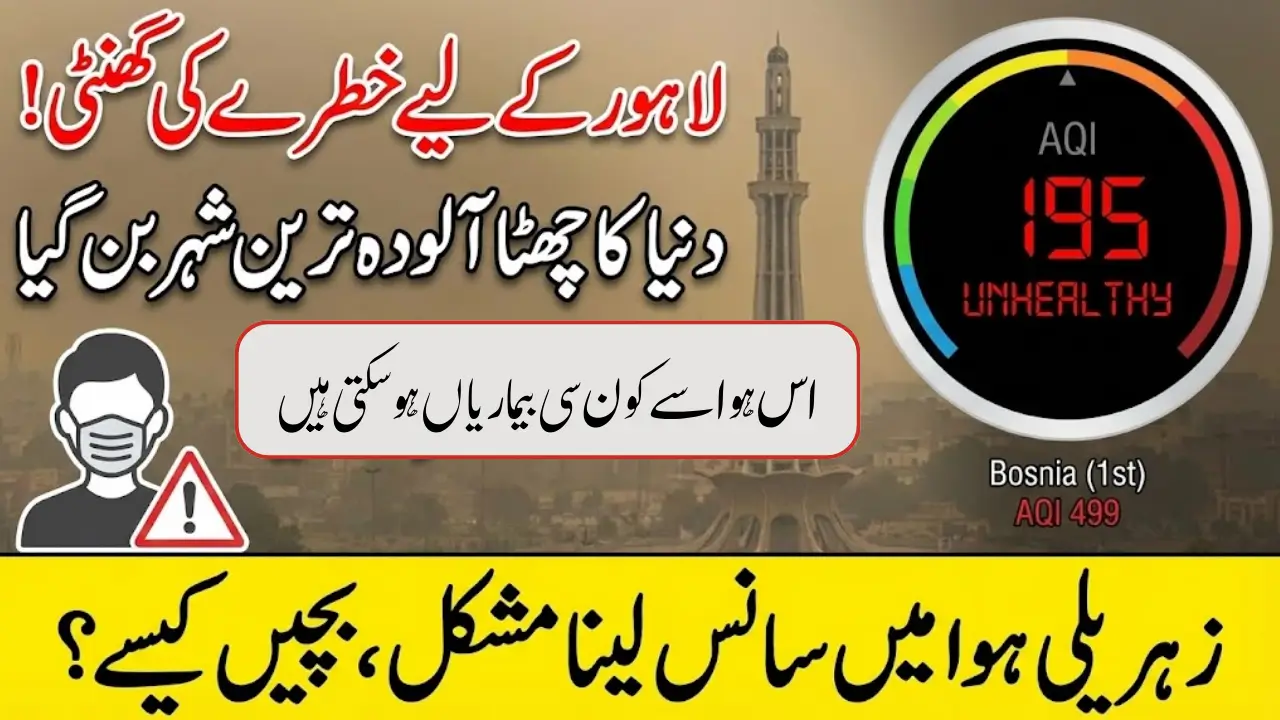
Air pollution has become a critical global issue, affecting millions of people across cities worldwide. Poor air quality not only impacts human health but also harms the environment and local economies. Recently, Lahore has entered the global spotlight by reaching the sixth position among the most polluted cities in the world. This ranking highlights the urgent need for immediate action to tackle pollution in the city.
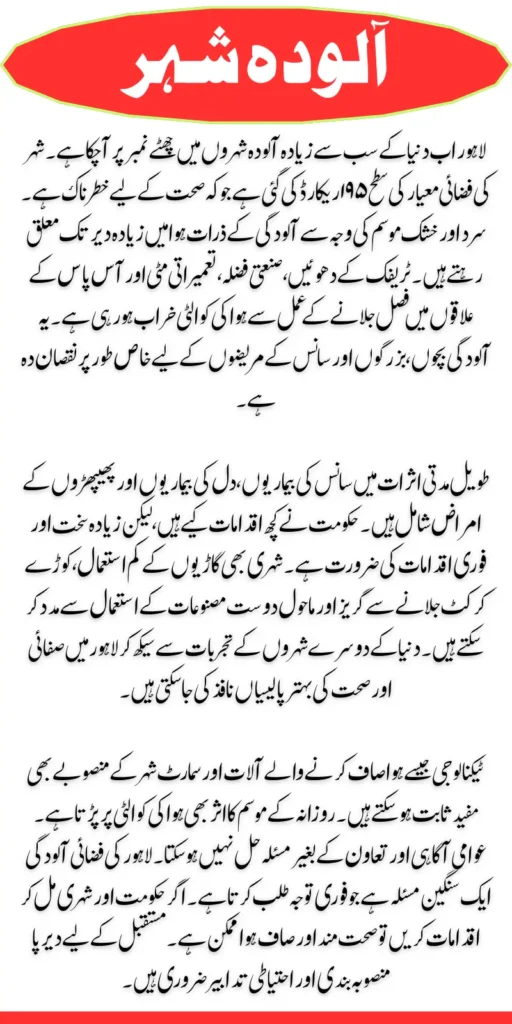
Lahore’s air quality index (AQI) has been recorded at 195, which is significantly high and poses health risks to residents. This article explores Lahore’s pollution status, compares it with other cities, and discusses steps that can be taken to improve air quality.
Understanding Air Quality Index (AQI)
The Air Quality Index (AQI) is a standardized method to measure the level of air pollution. It indicates how polluted the air is and its potential effects on human health. AQI values range from 0 to 500, with higher values representing more dangerous air conditions.
Key points about AQI:
- AQI below 50: Good air quality
- AQI 51–100: Moderate air quality
- AQI 101–200: Unhealthy for sensitive groups
- AQI 201–300: Unhealthy for everyone
- AQI 301–500: Hazardous
Lahore’s current AQI of 195 falls in the “unhealthy” category, indicating that sensitive individuals, including children, elderly, and people with respiratory conditions, are at risk.
You can also read: IMF BISP 8171 2026 Budget Increase For this Reason Qist 13500 to 14500
Bosnia: The Most Polluted City in the World
Bosnia has claimed the title of the most polluted city globally, with an AQI of 499. Such extreme pollution levels are alarming and require urgent attention.
Reasons behind Bosnia’s pollution:
- High industrial emissions
- Widespread use of coal for heating
- Limited air quality control measures
The hazardous AQI has made everyday life difficult, with residents facing serious health problems such as respiratory infections and cardiovascular issues.
Delhi: Second on the List
India’s capital, Delhi, ranks second with an AQI of 282. Delhi’s pollution is notorious, primarily due to traffic congestion, industrial emissions, and seasonal crop burning in nearby states.
Delhi vs. Lahore comparison:
- Delhi AQI: 282 (higher than Lahore)
- Lahore AQI: 195
- Health risks are higher in Delhi due to prolonged exposure to severe pollution
Wuhan and Dhaka: Third and Fourth Positions
China’s Wuhan ranks third with an AQI of 217, while Bangladesh’s Dhaka comes fourth with 213. Both cities experience high industrial activity and dense traffic, contributing to their poor air quality.
Common pollution sources:
- Vehicular emissions
- Industrial waste
- Urban construction dust
Lahore’s Pollution Status
Lahore has now reached sixth place globally, with an AQI of 195. The city experiences cold and dry weather, which can exacerbate air pollution levels. Particles remain suspended in the air longer in dry conditions, making the air hazardous.
Residents must remain cautious, especially those with respiratory issues, as prolonged exposure can cause serious health complications.
Factors Contributing to Lahore’s Air Pollution
Several factors contribute to Lahore’s rising pollution:
- Industrial Emissions: Factories release smoke and chemicals
- Traffic Congestion: Heavy vehicle traffic increases harmful emissions
- Construction Dust: Ongoing urban development releases particulate matter
- Crop Burning: Farmers in surrounding areas burn crops, releasing smoke into the city
Key bullet points:
- AQI worsens during winter due to thermal inversions
- Lack of strict environmental regulations exacerbates the problem
- Urban planning issues contribute to high pollution levels
Health Implications of Lahore’s Pollution
High pollution levels pose serious health risks for Lahore’s residents.
Short-term effects:
- Irritated eyes and throat
- Coughing and sneezing
- Shortness of breath
Long-term consequences:
- Chronic respiratory diseases like asthma
- Cardiovascular problems
- Increased risk of lung cancer
It is crucial to adopt protective measures like wearing masks and using air purifiers indoors.
You can also read: How Many Matches Will Be Played in PSL 11?
Comparative Analysis of South Asian Cities
| City | AQI | Rank | Main Pollution Sources |
|---|---|---|---|
| Bosnia | 499 | 1st | Industrial, coal heating |
| Delhi | 282 | 2nd | Traffic, crop burning, industry |
| Wuhan | 217 | 3rd | Industry, traffic |
| Dhaka | 213 | 4th | Industrial emissions, vehicles |
| Lahore | 195 | 6th | Traffic, industry, construction |
This comparison highlights Lahore’s pollution as a significant concern in South Asia.
Daily Weather in Lahore
The current weather conditions in Lahore contribute to air pollution levels:
- Minimum Temperature: 11°C
- Maximum Temperature: 25°C
- Weather Pattern: Alternating sun and clouds
Dry air prevents pollutants from dispersing, keeping particles trapped near ground level, worsening air quality.
Government Measures and Policies
The government has taken some steps to control pollution, but more aggressive measures are needed:
- Regulation of industrial emissions
- Traffic management and promotion of public transport
- Awareness campaigns for crop burning alternatives
Future initiatives may include urban green projects and stricter environmental monitoring.
Public Awareness and Actions
Citizen involvement is essential for reducing pollution:
- Reduce vehicle usage and carpool
- Avoid burning trash or crops
- Use eco-friendly products and energy sources
Community participation can significantly improve Lahore’s air quality over time.
Technological Solutions for Air Quality Improvement
Advanced technology can help Lahore fight pollution:
- Air purifiers for homes and offices
- Real-time AQI monitoring apps
- Smart city solutions to manage traffic and emissions
Investing in technology ensures long-term air quality improvement.
Global Lessons for Lahore
Cities like Delhi and Beijing have successfully reduced pollution using combined strategies:
- Strict industrial regulations
- Promotion of renewable energy
- Public awareness and participation
Lahore can adopt these measures to achieve cleaner air and healthier living conditions.
Conclusion
Lahore’s rise to the sixth most polluted city in the world is alarming and highlights the urgent need for immediate action. From industrial emissions to traffic and crop burning, multiple factors contribute to poor air quality. Both the government and citizens must collaborate to implement sustainable solutions and protect public health.
You can also read: Relief in Electricity Bills Expected Monthly Fuel Adjustment Prices
Immediate steps and long-term policies can help Lahore breathe cleaner air and secure a healthier future for its residents.
FAQs
1. Why is Lahore ranked sixth in air pollution?
Lahore’s high AQI of 195, caused by traffic, industry, construction, and crop burning, has placed it sixth globally.
2. What are the health risks of high AQI in Lahore?
Residents face respiratory issues, cardiovascular problems, and long-term chronic diseases due to prolonged exposure.
3. How does weather affect Lahore’s air quality?
Cold and dry weather traps pollutants, preventing dispersion and increasing AQI levels.
4. What can citizens do to reduce pollution?
Using public transport, reducing vehicle use, avoiding crop burning, and supporting eco-friendly initiatives can help.
5. Are there government initiatives to improve Lahore’s air quality?
Yes, the government is regulating industrial emissions, promoting public awareness, and considering stricter policies.
Offical Soruse: Most Polluted Cities