
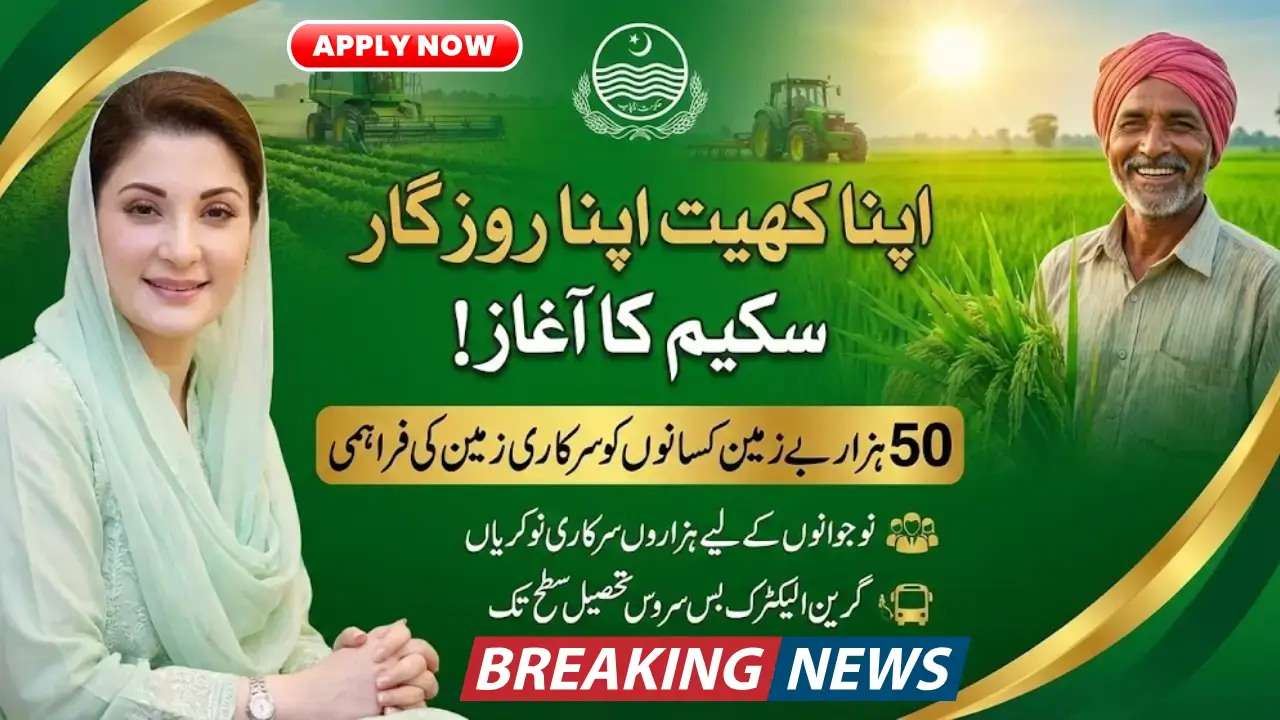
Punjab has witnessed many development announcements over the years, but some initiatives stand out because they directly touch the roots of rural life. Apna Khet Apna Rozgar Scheme 2026, launched under the leadership of CM Maryam Nawaz Sharif, is one such transformative step. This scheme is not just about agriculture; it is about dignity, ownership, and long-term economic stability for landless farmers across Punjab.
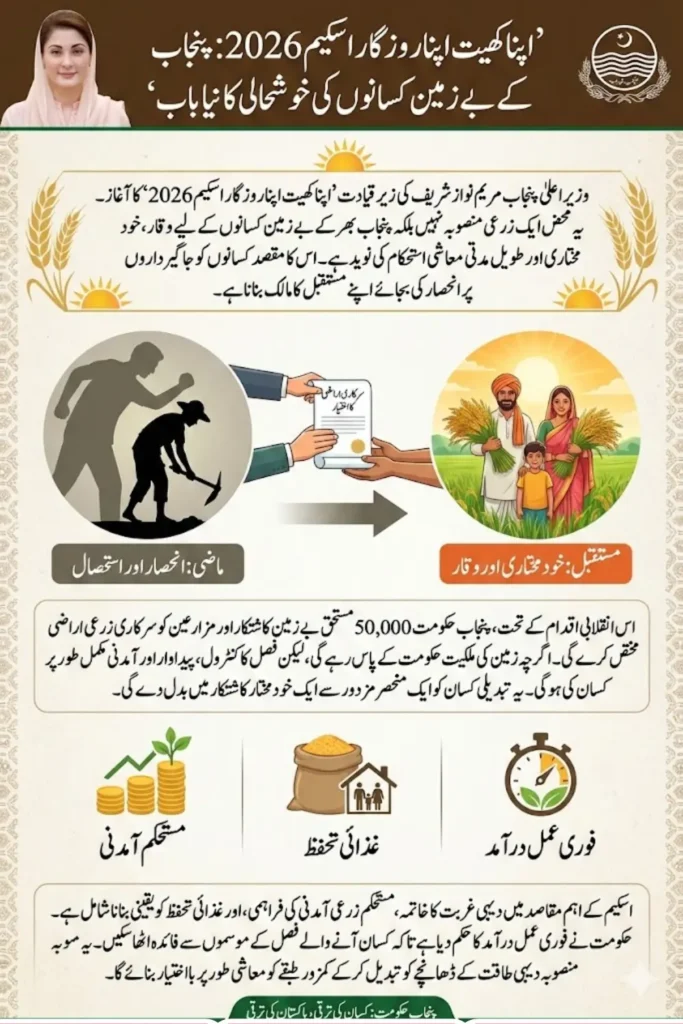
At a time when rural poverty, tenant exploitation, and income uncertainty remain major challenges, this initiative promises a new beginning. By allocating government-owned agricultural land to deserving farmers, the Punjab government aims to convert laborers into land cultivators working under their own name. In simple words, it gives farmers control over their future instead of dependence on landlords.
This article explains the scheme in detail, covering objectives, eligibility, benefits, implementation strategy, and how it connects with other major welfare initiatives announced in the same cabinet meeting.
What Is Apna Khet Apna Rozgar Scheme?
The Apna Khet Apna Rozgar Scheme is a province-wide agricultural reform initiative designed to empower landless farmers. Under this program, cultivable government land will be allotted to selected farmers so they can grow crops independently and earn a sustainable livelihood.
Unlike traditional tenancy systems, farmers under this scheme will cultivate land officially registered in their name for use. While ownership remains with the government, the control, produce, and income belong to the farmer. This shift changes the farmer’s role from a dependent worker to an independent cultivator.
You can also read: BISP Payment Messages for 8171 to Rs 14500
The scheme was approved during the 32nd Punjab Cabinet Meeting, chaired by CM Maryam Nawaz Sharif, with clear instructions for immediate execution to avoid missing ongoing and upcoming crop seasons.
Quick Overview of Apna Khet Apna Rozgar Scheme
| Detail | Information |
|---|---|
| Scheme Name | Apna Khet Apna Rozgar |
| Launched By | Punjab Government |
| Chairperson | CM Maryam Nawaz Sharif |
| Approved In | 32nd Punjab Cabinet Meeting |
| Target Beneficiaries | 50,000 landless farmers |
| Land Type | Government agricultural land |
| Coverage Area | Entire Punjab |
| Status | Approved and implementation ordered |
This structured approach shows that the scheme is not an announcement on paper but a policy ready to be executed on the ground.
Main Objectives of the Scheme
The government has set clear and people-focused goals for this initiative. These objectives address long-standing rural issues that previous programs often overlooked.
Key objectives include:
- Providing cultivable land to landless tenants and laborers
- Reducing dependence on landlords and middlemen
- Ensuring stable agricultural income for poor families
- Strengthening food security at the household and provincial level
- Promoting dignity and social respect for farmers
By focusing on ownership of effort rather than ownership of land, the scheme balances public resources with private empowerment.
Who Will Benefit From This Program?
The primary beneficiaries are landless farmers, including tenants and daily wage agricultural laborers who have spent years cultivating others’ land without security or recognition.
This scheme is particularly important for families that:
- Have agricultural skills but no land of their own
- Depend on seasonal farm labor for survival
- Face exploitation through unfair crop-sharing systems
- Lack long-term income stability
By targeting this segment, the government ensures that support reaches those who need it the most, not those already resource-rich.
Why Government Agricultural Land Matters
Government-owned agricultural land has often remained underutilized or leased in ways that did not benefit the poorest communities. This scheme redefines how public land should serve public interest.
For rural families, land is more than soil. It represents food, security, and independence. Having land to cultivate means families can plan for the future instead of living day to day.
Major benefits include:
- Predictable seasonal income
- Improved household food availability
- Ability to invest in better seeds and farming methods
- Increased confidence and social standing
In essence, this land becomes a foundation for economic self-reliance.
Implementation Strategy and Timeline
One of the most important aspects of the Apna Khet Apna Rozgar Scheme is speed. CM Maryam Nawaz has clearly directed officials to move fast so farmers do not lose valuable crop cycles.
Implementation steps include:
- Identification of suitable government agricultural land
- Transparent selection of eligible farmers
- Swift allotment process without unnecessary delays
- Immediate start of cultivation
The emphasis on timing reflects a practical understanding of farming realities, where missing a season can mean losing an entire year’s income.
You can also read: Pakistani Electric Vehicle Manufacturing
How This Scheme Changes the Rural Power Structure
Traditionally, many farmers in Punjab work under influential landlords, leaving them with little bargaining power and limited earnings. This scheme challenges that system directly.
By cultivating land under their own name, farmers gain:
- Decision-making authority over crops
- Freedom from exploitative sharecropping
- Motivation to invest in land improvement
- A stronger voice in local communities
This is not just an agricultural reform; it is a social shift that empowers the weakest link in the rural economy.
Economic Impact on Rural Punjab
The ripple effects of this scheme are expected to go far beyond individual farmers. When rural incomes rise, local economies become more active and resilient.
Positive economic outcomes include:
- Increased agricultural production
- Higher spending in local markets
- Job creation in allied sectors like transport and storage
- Reduced rural-to-urban migration
Over time, these changes can contribute to balanced regional development across Punjab.
Youth Employment Approved Alongside the Scheme
The same cabinet meeting that approved Apna Khet Apna Rozgar also addressed youth unemployment. Thousands of new government jobs were sanctioned across multiple departments.
Departments receiving approval include:
- Crime Control Department
- Excise, Taxation & Narcotics Control
- Home Department
- Tourism Police in Murree
- IT and Innovation Wing
- TDCP on contract basis
This parallel focus on agriculture and employment shows a broader development vision rather than isolated policy actions.
Green Electric Buses Expansion to Tehsil Level
Another major decision was the expansion of green electric buses beyond major cities. For the first time, tehsil-level routes will benefit from eco-friendly public transport.
Key transport updates include:
- 1,000 electric buses approved
- Expansion from districts to tehsils
- Cashless payment system from March 25
- Support for T-Cash and bank cards
This initiative reduces travel costs, improves air quality, and connects rural populations with economic centers.
Apni Chhat Apna Ghar Housing Relief
Housing support also received attention through the Apni Chhat Apna Ghar scheme. Joint families can now apply for interest-free loans to expand existing homes.
This decision reflects the social reality of Punjab, where extended families often live together. Initial balloting includes districts such as Jhelum, Kasur, Faisalabad, and Lodhran.
Housing stability complements agricultural income, creating a more secure living environment for rural families.
Cultural and Livestock Development Initiatives
CM Maryam Nawaz also emphasized reviving Punjab’s agricultural and cultural identity. Horse and cattle shows will be organized in every district.
These events will focus on:
- Modern breeding techniques
- Livestock health awareness
- Farmer education and networking
- Promotion of best agricultural practices
Such initiatives strengthen the knowledge base of farmers while celebrating Punjab’s rural heritage.
Other Key Decisions From the Cabinet Meeting
Several additional approvals were made that support social and economic development:
- Driving permits for 16–18 year olds
- Expansion of tourist destinations beyond Murree
- Increase in School Management Council stipends
- Recruitment relaxations in archaeology and museums
- Approval of new agriculture leadership roles
Together, these measures indicate a coordinated governance approach rather than isolated announcements.
Why Apna Khet Apna Rozgar Feels Different
What makes this scheme stand out is its clarity and urgency. Instead of pilot projects or delayed rollouts, the government has ordered immediate implementation with defined beneficiaries.
The focus on real problems, practical timelines, and transparent processes gives people confidence. Farmers are not being promised subsidies alone; they are being trusted with responsibility and opportunity.
This approach builds trust between the state and citizens, which is essential for long-term development.
You can also read: Prime Minister Youth Loan Scheme 2026
Conclusion
The Apna Khet Apna Rozgar Scheme 2026 is more than a land distribution initiative. It is a statement that farmers deserve ownership of their effort, security of income, and respect in society. If implemented with transparency and consistency, this scheme can reshape rural Punjab for generations.
By combining agricultural reform with youth employment, transport upgrades, and housing support, the Punjab government has presented a holistic vision of development. The success of this initiative now depends on execution, monitoring, and continued political will.
Frequently Asked Questions (FAQs)
1. Who is eligible for Apna Khet Apna Rozgar Scheme?
Landless farmers, including tenants and agricultural laborers across Punjab, are eligible based on government criteria.
2. Does the farmer become the owner of the land?
No, the land remains government-owned, but farmers cultivate it under their own name and keep the income.
3. How many farmers will benefit from this scheme?
Approximately 50,000 landless farmers across Punjab will benefit in the initial phase.
4. When will the implementation start?
Implementation has been ordered immediately to avoid missing crop seasons.
5. Is this scheme limited to specific districts?
No, the scheme covers the entire province of Punjab.