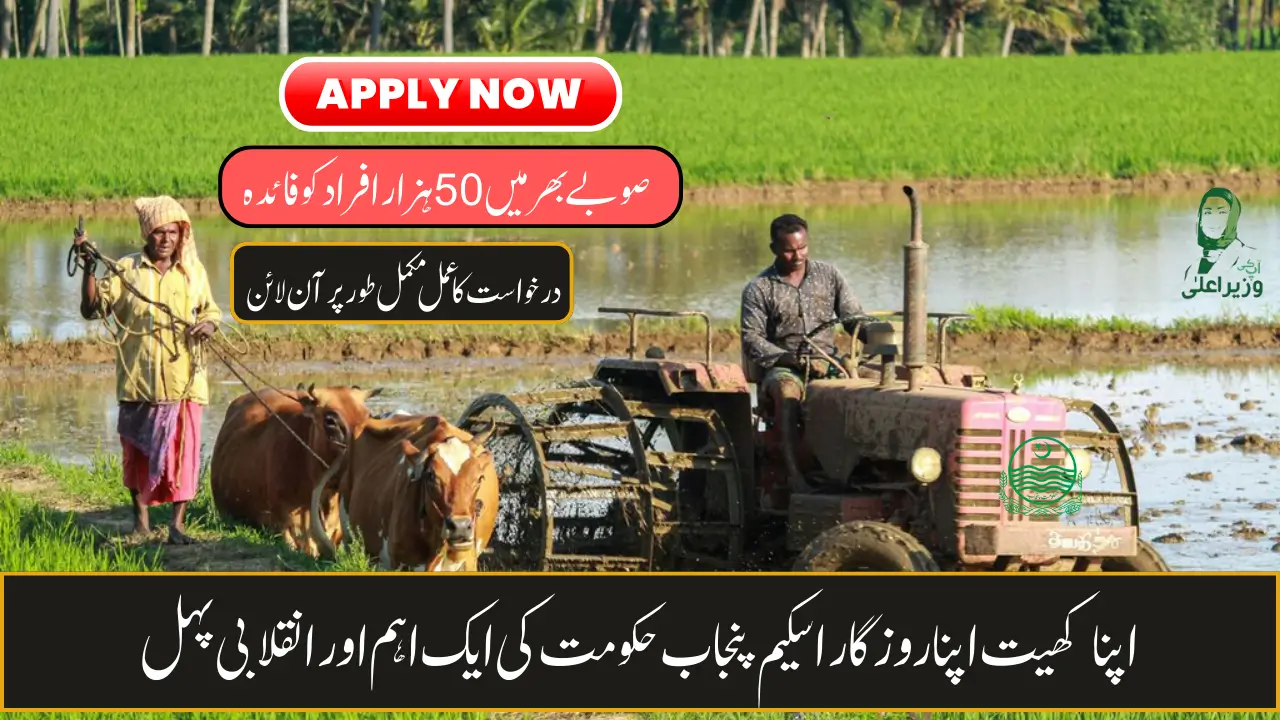
The Apna Khet Apna Rozgar Scheme Apply Online Step by Step guide is designed for landless and unemployed citizens of Punjab who want a dignified, long-term source of income through agriculture. Launched in 2026 by the Punjab Government under the leadership of Chief Minister Maryam Nawaz Sharif, this initiative is not about temporary relief. It is about ownership, productivity, and restoring confidence in rural livelihoods.
Instead of waiting for aid or relying on daily wage work, eligible families will get access to government agricultural land for cultivation. This approach turns unused land into productive fields and unemployed citizens into self-employed farmers. In simple words, it gives people a field to work on and a future to build.
What Is Apna Khet Apna Rozgar Scheme?
The Apna Khet Apna Rozgar Scheme is a government-backed agricultural employment program that aims to allocate cultivable government land to landless citizens across Punjab. The goal is simple: help people earn through farming rather than depend on short-term assistance or unstable labor.
This scheme focuses on sustainability. When a family gets land, they do not just earn once. They earn season after season. Crops become income, and farming becomes a reliable profession again, especially in rural areas where jobs are limited but agricultural skills already exist.
Core idea of the scheme includes:
- Productive use of unused government agricultural land
- Long-term self-employment through farming
- Strengthening food security in Punjab
- Reducing rural poverty through income generation
Background and Approval of the Scheme
The scheme was officially approved during the 32nd Punjab Cabinet Meeting, chaired by Chief Minister Maryam Nawaz Sharif. This approval reflects the government’s shift from short-term welfare programs to structural economic solutions.
You can also read: Pakistani Electric Vehicle Manufacturing
The cabinet decided to allocate land to 50,000 eligible individuals in different districts of Punjab. This large number shows that the scheme is not symbolic. It is meant to create measurable impact on employment, food production, and rural stability.
Why Apna Khet Apna Rozgar Scheme Matters in 2026
Punjab is facing multiple challenges at the same time. Inflation is rising, food prices are increasing, and job opportunities in rural areas are shrinking. This scheme directly responds to these problems with a single, practical solution.
Instead of cash handouts that end quickly, land creates continuous value. Farming not only feeds families but also supplies local markets, stabilizing food prices and strengthening the rural economy.
Major issues addressed by the scheme:
- Rural unemployment
- Food insecurity
- Underutilized government land
- Migration from villages to cities
Who Can Benefit from Apna Khet Apna Rozgar Scheme?
The scheme is primarily designed for people who are willing to work but lack resources. While final eligibility rules will be announced officially, the focus is clear.
The main beneficiaries are expected to be citizens who already understand basic farming or belong to agricultural communities but do not own land. This ensures that the land is actually cultivated and not left unused.
Likely target groups include:
- Landless farmers
- Unemployed rural youth
- Low-income families
- Daily wage workers in villages
- Individuals committed to cultivation
Key Objectives of Apna Khet Apna Rozgar Program
Every government scheme has goals, but this one is built around practical outcomes. The objective is not just employment but independence.
By giving land instead of money, the government is encouraging people to rely on their skills and effort. This creates confidence, stability, and pride among beneficiaries.
Main objectives of the scheme:
- Promote self-employment through agriculture
- Increase agricultural production
- Improve rural living standards
- Reduce dependence on government aid
- Ensure long-term income sources
Key Benefits of Apna Khet Apna Rozgar Scheme
The benefits of this scheme go far beyond financial support. It changes how families plan their future.
Land ownership or long-term land use gives security. Families can plan crops, manage expenses, and invest in better farming practices. This creates a cycle of growth instead of survival.
Major benefits include:
- Access to agricultural land without purchase
- Seasonal and continuous income
- Reduced job uncertainty
- Improved household food supply
- Stronger rural economy
Apna Khet Apna Rozgar Scheme 2026
| Detail | Information |
|---|---|
| Scheme Name | Apna Khet Apna Rozgar |
| Launched By | Government of Punjab |
| Approved In | 32nd Cabinet Meeting |
| Total Beneficiaries | 50,000 individuals |
| Type of Support | Government agricultural land |
| Target Group | Landless & unemployed citizens |
| Purpose | Employment & food security |
| Province | Punjab |
Apna Khet Apna Rozgar Scheme Apply Online Step by Step
The Apna Khet Apna Rozgar Scheme Apply Online process is expected to be simple, transparent, and fully digital. The Punjab Government plans to use CNIC-based verification to eliminate favoritism and ensure fairness.
Applicants will be able to apply from their homes or through facilitation centers once the official portal goes live. This digital approach saves time and reduces corruption.
Expected application process:
- Visit official Punjab government portal
- Complete online registration form
- Enter CNIC and personal details
- Submit required information
- Wait for verification and selection
You can also read: Prime Minister Youth Loan Scheme 2026
CNIC-Based Verification and Transparency
One of the strongest features of this scheme is CNIC-based verification. This system ensures that only eligible citizens apply and that no one can apply multiple times.
By linking applications to national identity records, the government is creating a transparent selection process. This builds public trust and ensures that land reaches deserving families.
Transparency measures include:
- CNIC-linked applications
- Digital record keeping
- Merit-based selection
- Clear eligibility screening
Land Allocation Process and Cultivation Rights
Once selected, beneficiaries will receive land specifically for cultivation. The land remains government-owned but is allocated for productive use under defined terms.
This approach protects public assets while still giving farmers the freedom to cultivate crops, earn income, and support their families. It balances responsibility with opportunity.
Real-Life Impact on Rural Families
When a rural family receives land, the impact is immediate and long-lasting. Income becomes seasonal instead of daily, and planning replaces uncertainty.
Children are more likely to stay in school, healthcare improves, and migration to overcrowded cities slows down. Farming becomes a source of dignity rather than hardship.
Observed social impacts include:
- Improved education continuity
- Reduced urban migration
- Stronger local food supply
- Increased community stability
How This Scheme Supports Food Security
Food security is not just about availability; it is about affordability and local supply. By increasing cultivated land, this scheme strengthens Punjab’s food system from the ground up.
More crops mean more supply in local markets, which helps control prices. This benefits both farmers and consumers.
What Makes Apna Khet Apna Rozgar Scheme Different
Unlike cash assistance programs, this scheme does not create dependency. It creates opportunity.
There are no middlemen, no recurring payments, and no short-term fixes. Instead, it offers a productive asset that grows value over time.
Key differences include:
- No cash handouts
- No recurring aid dependency
- Focus on productivity
- Long-term livelihood creation
Challenges and Responsibilities for Beneficiaries
With opportunity comes responsibility. Beneficiaries are expected to actively cultivate the land and use it productively.
The success of the scheme depends on commitment. Land left unused defeats the purpose, which is why monitoring and accountability will play an important role.
Future Scope of Apna Khet Apna Rozgar Program
If implemented successfully, this scheme could expand beyond 50,000 beneficiaries. It can become a model for other provinces and future governments.
By combining employment, food security, and land management, it sets a strong example of sustainable policy-making.
Conclusion
The Apna Khet Apna Rozgar Scheme 2026 is more than an agricultural program. It is a shift in thinking. Instead of asking people to survive on aid, it gives them tools to stand on their own.
For landless and unemployed citizens, this scheme offers dignity, stability, and a future rooted in hard work. Once online applications open, staying informed and applying on time could change lives for generations.
You can also read: Maryam Nawaz Launched Apna Khet Apna Rozgar Scheme
Frequently Asked Questions (FAQs)
1. What is Apna Khet Apna Rozgar Scheme?
It is a Punjab Government initiative that provides agricultural land to landless and unemployed citizens for cultivation and income generation.
2. Who can apply for this scheme?
Landless, unemployed, and low-income rural citizens who are willing to cultivate land can apply.
3. How to apply online for Apna Khet Apna Rozgar Scheme?
Applicants will apply through an official Punjab government portal using CNIC-based registration once applications open.
4. Is this scheme a loan or cash assistance?
No, it is not a loan or cash aid. It provides access to agricultural land for self-employment.
5. How many people will benefit from this scheme?
The scheme aims to benefit 50,000 individuals across Punjab in its initial phase.