
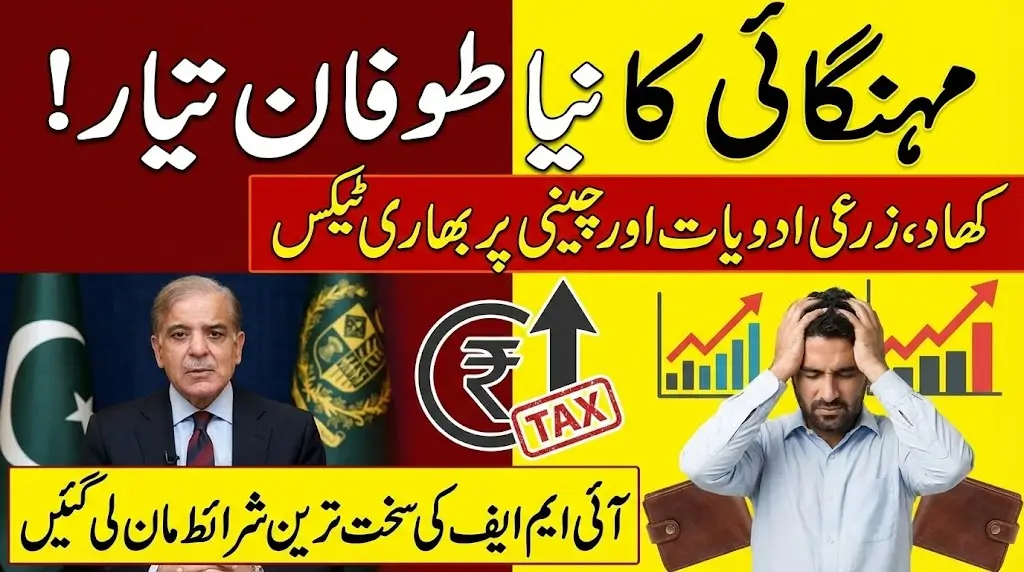
Pakistan is at a critical juncture in its economic journey. The government has pledged significant fiscal reforms to the International Monetary Fund (IMF) to stabilize the economy and secure crucial financial support. Measures include raising taxes on fertilizers, pesticides, and sugary products, moving selected items to an 18% GST slab, and curbing development expenditures.

These steps are aligned with Islamabad’s strategy to complete the IMF’s second review, unlock tranches from the Extended Fund Facility (EFF) and Resilience and Sustainability Facility (RSF), and maintain economic stability in the coming years. The IMF has acknowledged Pakistan’s progress in key economic areas but also emphasized that challenges remain. This article explores these reforms, fiscal measures, energy and social sector improvements, and the broader implications for Pakistan’s economic recovery.
Pakistan’s Commitment to the IMF
Pakistan’s commitment to the IMF focuses on revenue generation and fiscal discipline. The government has announced:
- Raising taxes on fertilizers, pesticides, and sugary products.
- Moving select items to the standard 18% GST slab to broaden the tax base.
- Deregulating the sugar sector and continuing tariff adjustments in the power sector.
These measures aim to unlock $1.2 billion in combined support from the EFF and RSF. The government’s pledge signals a proactive approach to fiscal management, ensuring continued funding while aligning with IMF conditions.
IMF’s 2nd Programme Review and Pakistan’s Performance
The second review by the IMF assesses Pakistan’s progress under the loan programme. Key highlights include:
- Pakistan has achieved most targets set under the programme.
- Foreign exchange reserves increased from $9.4 billion to $14.5 billion within a year.
- Primary surplus of 1.3% achieved in FY2025.
However, the IMF warns that the balance of payment gap may widen to $3.253 billion by 2029–30, signaling the potential need for additional IMF programs in the future.
Contingency Measures:
To mitigate fiscal risks, Pakistan is prepared to:
- Increase excises on fertilizers and pesticides by five percentage points.
- Introduce excises on high-value sugary items.
- Broaden the GST base by moving selected items to the standard rate.
- Reduce or postpone spending if revenue targets are not met.
You can also read: 8171 Registration Reopens in December 2025
Development Spending Adjustments
Fiscal prudence is central to Pakistan’s economic plan. The government has decided to:
- Limit new development projects to 10% of the Public Sector Development Programme (PSDP).
- Prioritize completion of ongoing projects worth around Rs2.5 trillion.
- Focus future spending on climate-related development schemes.
Table: PSDP Spending Priorities FY2026
| Spending Category | Allocation Focus | Key Objective |
|---|---|---|
| Ongoing Projects | Rs2.5 trillion | Completion and efficiency |
| New Projects | 10% of PSDP | Limit fiscal exposure |
| Climate Schemes | Increasing share | Sustainable development |
Digital e-pads will be introduced for public procurement, with mandatory compliance reports submitted to the President by March 2026.
Social Protection Reforms
Under the social protection pillar, Pakistan aims to strengthen safety nets for vulnerable populations:
- Kafalat cash transfer will increase to Rs14,500 per quarter starting January 2026.
- Beneficiaries will expand to 10.2 million families.
- Biometric verification will remain mandatory to prevent fraud.
- An e-wallet system is scheduled for nationwide rollout by June 2026.
These measures ensure transparency, efficiency, and broader coverage for families in need.
Energy Sector Reforms
Energy reforms are critical to Pakistan’s fiscal stability. Key initiatives include:
- Shifting annual tariff rebasing from July to January 2026.
- Reducing circular debt stock to Rs1.614 trillion.
- Settling Rs1.2 trillion owed to commercial banks by January 2026, with Rs660 billion going to Pakistan Private Holdings Limited.
- Eliminating Rs128 billion in interest payments owed to Independent Power Producers (IPPs).
- Maintaining zero inflow into circular debt until FY2031.
These measures are aimed at stabilizing the power sector and improving financial sustainability.
You can also read: BISP 3rd Installment Via Bank Check Benefits
Tax Collection and Fiscal Performance
Pakistan has made notable progress in tax collection:
- 5.2 million income tax returns filed in FY2024; projected 7 million in FY2025.
- Primary surplus of 1.3% in FY2025, achieved in line with IMF targets.
- Revenue enhancement efforts and debt reduction reforms are ongoing.
This indicates a gradual strengthening of fiscal discipline and improved government revenue streams.
Inflation and Monetary Policy
The IMF notes that inflation rose temporarily due to food price hikes following floods. Key points include:
- Inflation projected to ease to 7% in the current fiscal year.
- Tight monetary policy is emphasized to maintain price stability.
- Flexible exchange rates are necessary to absorb external shocks.
These policies aim to ensure stable economic growth while managing inflationary pressures effectively.
Climate Vulnerability and Disaster Preparedness
The 2022 floods highlighted Pakistan’s susceptibility to climate disasters:
- 7 million people affected, nearly 1,000 lives lost, extensive infrastructure damage.
- IMF recommends stronger climate adaptation and water management.
- Flood risk management reforms are integrated into RSF initiatives.
Sustainable planning and disaster preparedness are now central to Pakistan’s economic and social policies.
Governance and State-Owned Enterprises
Improving governance in state-owned enterprises (SOEs) is essential for long-term economic growth:
- Greater transparency and accountability in public institutions.
- Reforms to attract investment and improve operational efficiency.
- Alignment of trade and investment policies with sustainable growth objectives.
Energy and Trade Reforms
Energy and trade reforms support economic stability:
- Stabilizing the power sector through tariff adjustments.
- Promoting trade and investment reforms to stimulate growth.
- Ensuring a reliable energy supply for industrial and agricultural sectors.
These steps are integral to building a resilient and growth-oriented economy.
Resilience and Sustainability Facility (RSF) Goals
RSF initiatives focus on long-term resilience:
- Flood risk management and water governance reforms.
- Climate-focused development projects.
- Integration with social protection and fiscal sustainability efforts.
RSF ensures Pakistan can better withstand environmental shocks while continuing economic development.
Pakistan’s Economic Recovery Outlook
The IMF reports that Pakistan’s economic recovery is fragile but positive:
- Stronger reforms and consistent policy implementation are crucial.
- Debt reduction, increased revenue collection, and fiscal discipline are ongoing priorities.
- Improved governance, energy stabilization, and climate adaptation support sustainable growth.
Pakistan’s path forward depends on careful implementation of fiscal, social, and energy reforms while maintaining macroeconomic stability.
You can also read: Government Likely to Revise Petroleum Prices
Conclusion
Pakistan’s commitment to raising taxes on agricultural inputs, reforming social protection, and restricting development spending represents a comprehensive approach to economic stability. Coupled with energy reforms, improved governance, and climate resilience measures, these actions position the country to meet IMF targets, enhance revenue, and ensure sustainable growth. The success of these reforms depends on consistent implementation, fiscal discipline, and continued alignment with international best practices.
FAQs
1. Which items are being moved to the 18% GST slab?
Selected fertilizers, pesticides, and high-value sugary products.
2. How will the Kafalat program expand in 2026?
Cash transfers will increase to Rs14,500 per quarter, covering 10.2 million families.
3. What are the plans for circular debt reduction?
Settlement of Rs1.2 trillion owed to banks, eliminating Rs128 billion interest to IPPs, maintaining zero inflow until FY2031.
4. How will Pakistan manage inflation?
Through tight monetary policy and flexible exchange rates, with inflation projected to ease to 7%.
5. Why are energy and trade reforms crucial?
They stabilize the power sector, support investment, and promote sustainable economic growth.
Please don’t forget to leave a review.