
Artificial Intelligence is no longer just a futuristic idea. It is now part of everyday life, shaping how people work, communicate, and solve problems. Punjab has taken a bold and forward-looking step by introducing Artificial Intelligence as a new subject in government schools across the province.
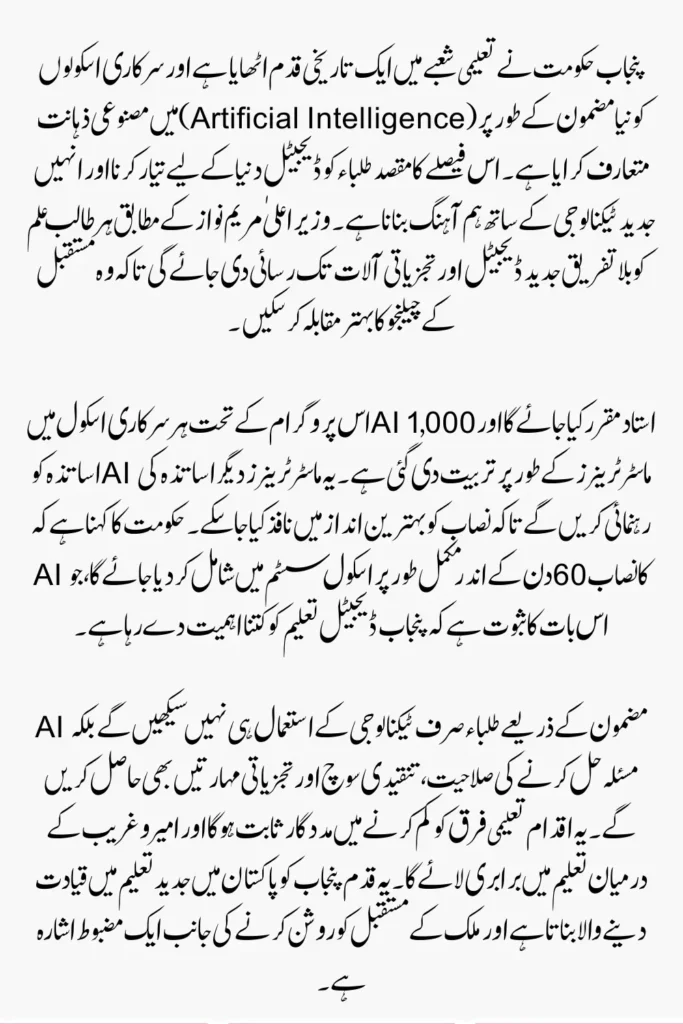
This initiative reflects a strong commitment to modernizing education and preparing students for a technology-driven world. From trained AI teachers to a structured curriculum, Punjab is laying the foundation for a smarter, more digitally skilled generation.
Introduction to AI Education in Punjab
Punjab’s education sector is undergoing a significant transformation. The introduction of Artificial Intelligence as a formal subject represents a shift from traditional teaching models toward a more skills-based and technology-focused approach.
By embedding AI into the school curriculum, Punjab aims to ensure that students are not just passive users of technology but active creators and problem solvers. This move recognizes that digital literacy is no longer optional; it is essential for survival in the modern world.
The new subject will be taught in government schools across the province, making advanced knowledge accessible to millions of students who previously had limited exposure to emerging technologies.
This step sets Punjab apart as a pioneer in digital education within Pakistan.
Key aspects of this initiative include:
• Province-wide implementation in public schools
• Focus on practical and conceptual AI learning
• Equal access for students regardless of background
• Integration with existing subjects
These elements together define a comprehensive approach to modern education.
You can also read: Final Decision on Participation in T20 World Cup
Vision of Chief Minister Maryam Nawaz
Chief Minister Maryam Nawaz has described this initiative as a historic digital leap for Punjab. Her vision centers on empowering students with the tools they need to compete globally and succeed in a rapidly evolving world.
Her leadership emphasizes innovation, inclusion, and long-term planning. Rather than short-term reforms, this initiative focuses on building a sustainable digital ecosystem in education.
Core principles behind the vision include:
• Equal opportunities for all students
• Focus on future-ready skills
• Integration of technology in classrooms
• Investment in teacher training
This vision ensures that the initiative is not symbolic but practical and impactful.
Why Artificial Intelligence Matters in Schools
Artificial Intelligence is transforming industries worldwide. From healthcare to finance, and from transportation to agriculture, AI is shaping how decisions are made and how services are delivered.
Introducing AI at the school level helps students understand these changes early. It builds curiosity, logical thinking, and problem-solving skills. Students who learn AI concepts gain a better understanding of data, automation, and intelligent systems. These skills are valuable regardless of the career path they choose.
Reasons AI education is essential include:
• Encourages critical and analytical thinking
• Builds problem-solving abilities
• Introduces coding and computational logic
• Prepares students for emerging careers
AI education creates a strong foundation for lifelong learning.
Punjab’s Digital Transformation in Education
Punjab has been investing heavily in digital infrastructure over the past few years. From smart classrooms to online learning platforms, the province is steadily moving toward a technology-driven education system.
The introduction of AI as a subject fits perfectly into this broader transformation strategy. It builds upon existing digital initiatives and pushes them to the next level.
Major steps in Punjab’s digital journey include:
• Expansion of digital classrooms
• Introduction of e-learning platforms
• Teacher capacity-building programs
• Now, AI as a formal subject
This progression reflects a clear and consistent policy direction.
Key Features of the New AI Subject
The AI subject is designed to be practical, engaging, and age-appropriate. It focuses on building foundational knowledge rather than overwhelming students with complex technical details.
The curriculum will introduce basic concepts such as what AI is, how it works, and where it is used in daily life. As students progress, they will explore more advanced ideas.
Important features include:
• Simple and structured lessons
• Hands-on activities and projects
• Real-world examples of AI use
• Alignment with national education standards
These features ensure that learning remains relevant and meaningful.
AI Teacher in Every Public School
One of the most innovative aspects of the program is the introduction of an AI teacher in every public school. These teachers will specialize in delivering AI-related content.
This approach ensures consistency and quality across schools. Students in remote areas will receive the same level of instruction as those in urban centers.
The presence of dedicated AI teachers also reduces the burden on existing staff.
Benefits of this model include:
• Specialized instruction
• Consistent teaching standards
• Better student engagement
• Strong subject ownership
This system strengthens the overall effectiveness of the initiative.
Training of 1,000 AI Master Trainers
To support the rollout, Punjab has trained 1,000 teachers as AI Master Trainers. These trainers will guide other teachers and ensure smooth implementation. The training focuses on both subject knowledge and teaching methodology. Trainers learn how to explain complex ideas in simple terms and how to use interactive teaching methods.
Key elements of the training program include:
• AI fundamentals
• Classroom teaching strategies
• Use of digital tools
• Student assessment methods
This strong training base ensures sustainability.
You can also read: Real Estate Investment Trust Step by Step Check
Curriculum Integration Within 60 Days
The AI curriculum is set to be fully integrated within 60 days. This rapid timeline reflects the government’s commitment to swift action. Instead of delaying implementation, Punjab is prioritizing speed without compromising quality.
Integration steps include:
• Curriculum finalization
• Teacher deployment
• Classroom readiness
• Monitoring mechanisms
This structured approach supports timely execution.
How Students Will Benefit from AI Education
Students will gain both technical and cognitive skills through AI education. They will learn how to think logically, analyze data, and approach problems systematically.
Beyond technical skills, AI education also builds confidence and curiosity.
Major student benefits include:
• Improved digital literacy
• Enhanced problem-solving skills
• Exposure to modern technology
• Better career awareness
These benefits extend far beyond the classroom.
Impact on Teachers and School Management
Teachers will experience professional growth through training and new responsibilities. School management will also adopt more technology-driven practices. AI education encourages collaboration among teachers and promotes continuous learning.
Positive impacts include:
• Skill enhancement for teachers
• Improved teaching methods
• Better school performance
• Stronger academic culture
This creates a healthier education environment.
Bridging the Digital Divide in Punjab
One of the most significant outcomes of this initiative is reducing the digital divide. Students from low-income backgrounds often lack access to advanced technology.
By offering AI education in public schools, Punjab ensures that economic status does not determine digital opportunity.
This promotes fairness and social inclusion.
Key equity outcomes include:
• Equal access to technology education
• Reduced urban-rural gap
• Increased social mobility
• Greater inclusion
This step supports long-term social development.
Preparing Students for Future Careers
The job market is changing rapidly. Many future careers will require digital and analytical skills.
AI education helps students explore potential career paths early and make informed choices.
Future-oriented outcomes include:
• Awareness of tech careers
• Strong foundational skills
• Adaptability to change
• Higher employability
This preparation is essential for national progress.
Role of Government and Stakeholders
Successful implementation requires collaboration. The government, education departments, schools, and technology partners must work together.
Each stakeholder plays a unique role in ensuring quality and consistency.
Stakeholder responsibilities include:
• Policy support
• Resource allocation
• Training delivery
• Monitoring and evaluation
This shared responsibility strengthens the program.
Challenges and How Punjab Plans to Overcome Them
Every major reform faces challenges. These may include infrastructure gaps, teacher workload, and resource constraints.
Punjab plans to address these through phased implementation and continuous support.
Common challenges and solutions:
• Limited infrastructure → Gradual upgrades
• Teacher resistance → Ongoing training
• Resource shortages → Budget allocation
Proactive planning reduces risks.
Long-Term Impact on Pakistan’s Education System
Punjab’s initiative could inspire other provinces to adopt similar reforms. Over time, this could transform Pakistan’s education landscape.
A digitally skilled population supports economic growth and innovation.
Expected long-term outcomes:
• Stronger human capital
• Increased innovation
• Global competitiveness
• Sustainable development
This positions Pakistan for future success.
Before reviewing the overview table, it is important to understand how different components of the program align with specific outcomes.
Below is a simple overview of key components and their intended impact.
| Component | Description | Expected Outcome |
|---|---|---|
| AI Subject | New subject in schools | Digital literacy |
| AI Teachers | Dedicated instructors | Quality education |
| Master Trainers | 1,000 trained experts | Sustainability |
| Curriculum Integration | 60-day rollout | Fast implementation |
This table highlights how structure supports results.
You can also read: How to Check Nebulavolt Fog Energy Device
Conclusion
Punjab’s introduction of Artificial Intelligence as a school subject represents a powerful step toward modern education. It shows a clear commitment to equipping students with relevant skills and knowledge.
By investing in teachers, curriculum, and infrastructure, Punjab is building a foundation for a smarter and more inclusive future. This initiative is not just about technology. It is about opportunity, empowerment, and preparing young minds for the challenges and possibilities of tomorrow.
FAQs
What is the main goal of introducing AI in schools?
To prepare students with digital and analytical skills for future careers.
Who announced the AI education initiative?
Chief Minister Maryam Nawaz announced the program.
How many teachers are trained as AI Master Trainers?
1,000 teachers have been trained.
When will the curriculum be fully integrated?
Within 60 days of the announcement.
Will AI education be available in all public schools?
Yes, it will be rolled out across all government schools.