
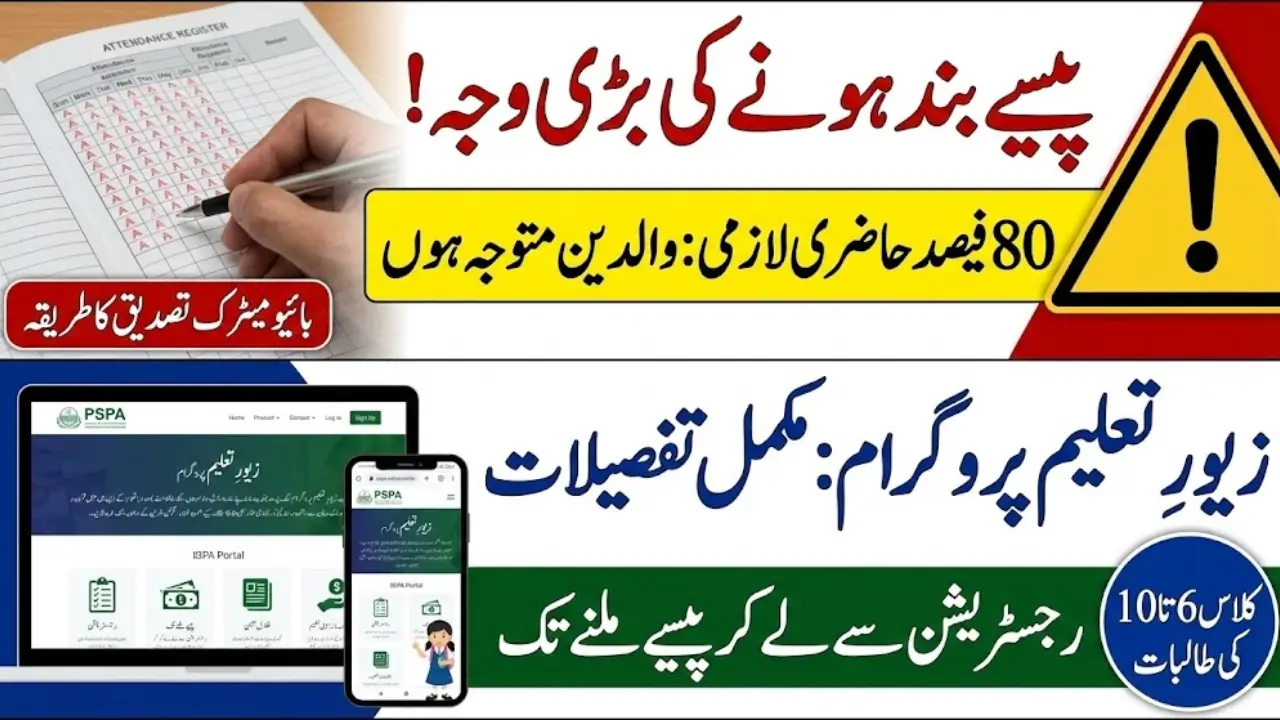
The Zewar e Taleem Program is one of the most impactful education support initiatives launched by the Punjab government for girls from poor and deserving families. Across many districts of Punjab, thousands of families want to educate their daughters, but financial pressure often forces them to stop schooling after primary classes. School uniforms, books, transport, and daily expenses slowly become unaffordable, especially for households already struggling to survive.
This program was introduced to remove that financial barrier. Instead of offering charity, the government linked financial support directly with education. The idea is simple: if a girl stays in school and attends classes regularly, her family receives financial assistance. This approach not only supports education but also changes mindsets where girls’ education was once considered unnecessary.
Vision and Objectives of Zewar e Taleem Program
The vision behind the Zewar e Taleem Program goes far beyond monthly cash support. The Punjab government designed this initiative as a long-term investment in social development. Educated girls grow into educated mothers, skilled workers, and confident citizens. This creates a positive chain reaction that benefits families, communities, and the entire province.
The main objectives of the program include:
- Increasing enrollment of girls in middle and secondary education
- Reducing dropout rates after primary school
- Supporting families facing financial hardship
- Promoting gender equality through education
- Ensuring effective use of public funds through conditions
By attaching conditions like attendance and school verification, the government ensures that financial assistance serves its real purpose: keeping girls in school.
You can also read: Zewar-e-Taleem Program – Easy Way to Check Status
Role of Punjab Social Protection Authority (PSPA)
Punjab Social Protection Authority (PSPA) plays a central role in implementing the Zewar e Taleem Program. PSPA is responsible for identifying eligible families, maintaining digital records, verifying attendance, and releasing payments. This authority already manages several welfare programs, which gives it experience in handling large-scale social initiatives.
PSPA has introduced transparency through digital systems. Instead of relying on manual paperwork or agents, families can now track their application and payment status online. Biometric verification, CNIC-based records, and school data integration reduce corruption and favoritism. Parents feel more confident because they can verify information themselves without depending on middlemen.
Who Is Eligible for Zewar e Taleem Program
The Zewar e Taleem Program is strictly targeted to ensure fairness and maximum impact. It is not open to everyone, and eligibility criteria are clearly defined. Only those who genuinely need financial support for girls’ education can benefit.
Eligibility criteria include:
- Only female students are eligible
- Student must be enrolled in a government school
- Classes covered range from 6th to Matric
- Family must fall under poverty criteria
- Student must belong to a covered district
This targeted approach ensures that limited resources are used where they are needed the most.
Classes and Schools Covered Under the Program
The program focuses on middle and secondary education because this is the stage where dropout rates are highest among girls. Many families allow girls to complete primary education but hesitate to continue due to rising expenses and social pressures.
Education coverage includes:
- Classes 6th to 10th
- Only government schools
- Verified enrollment through school records
Private school students are not eligible, as the program aims to strengthen public education and support families that cannot afford private schooling.
Attendance Requirement Explained
Attendance is the most critical condition under the Zewar e Taleem Program. The government has made it clear that financial support is not unconditional. Girls must attend school regularly to continue receiving assistance.
Key attendance rules include:
- Minimum 80% attendance is mandatory
- Attendance records are verified by schools
- Payments depend on attendance confirmation
If attendance falls below the required level, payments may be delayed or temporarily stopped. This condition encourages parents to prioritize education and ensure regular school attendance.
You can also read: Rana Sikandar Hayat Laptop Scheme 2026 For Student
Districts Covered Under Zewar e Taleem Program
The program initially focused on districts with low literacy rates and high poverty levels. These areas were identified through surveys and education data. By targeting underdeveloped districts, the government ensures that the program reaches the most neglected communities.
Covered districts include:
- Bahawalnagar
- Bahawalpur
- Bhakkar
- Chiniot
- DG Khan
- Jhang
- Kasur
- Khanewal
- Layyah
- Lodhran
- Muzaffargarh
- Okara
- Pakpattan
- Rajanpur
- Rahim Yar Khan
- Vehari
These districts represent regions where girls’ education needs the strongest support.
Financial Assistance and Payment Structure
The financial assistance provided under the Zewar e Taleem Program is meant to cover basic education-related expenses. It is not a salary or general cash aid but conditional support tied directly to schooling.
Key features of the payment system:
- Cash assistance linked with attendance
- Payments released after verification
- Focus on uniforms, books, and stationery
This structure ensures that financial help contributes directly to educational continuity rather than being misused.
CNIC-Based Online Status Check System
One of the most practical improvements in recent years is the CNIC-based online status check system. Parents and guardians no longer need to visit offices repeatedly to check application or payment status.
The system verifies:
- CNIC of parent or guardian
- Student enrollment details
- Attendance and verification status
This digital system saves time, reduces confusion, and improves transparency.
How to Check Zewar e Taleem Program Status Online
Checking the program status online is simple and user-friendly. Even people with basic mobile knowledge can use this system.
Steps to check status:
- Visit the official PSPA or Zewar e Taleem portal
- Enter CNIC number of parent or guardian
- Enter the verification code
- Click on “Check Status”
Within seconds, the system displays eligibility and payment information clearly.
Biometric Verification Process
Biometric verification is mandatory before payments are released. This step ensures that financial assistance reaches the correct family.
Biometric verification includes:
- Thumb impression of parent or guardian
- CNIC verification through NADRA
- Confirmation of student enrollment
If verification fails, families should update their records immediately to avoid delays
Common Reasons for Rejection or Payment Delay
Payment delays are common, but most issues are easy to fix if identified early.
Common reasons include:
- Attendance below 80%
- Student enrolled in a private school
- CNIC mismatch or expired CNIC
- Incomplete school records
Correcting these issues helps restore payments smoothly.
Impact of Zewar e Taleem Program on Girls’ Education
The impact of this program goes beyond individual students. Educated girls contribute to healthier families, stronger economies, and more aware communities.
Major benefits include:
- Reduced poverty and dependency
- Improved family health and education awareness
- Increased female participation in society
This program is a powerful investment in Pakistan’s future.
You can also read: State Bank of Pakistan Rolls Out Innovative Index
Guidance for Parents and Guardians
Parents play a crucial role in ensuring the success of the Zewar e Taleem Program. Simple attention to rules and documentation can prevent many problems.
Helpful guidance includes:
- Ensure regular school attendance
- Keep CNIC and records updated
- Use only official information sources
Responsible participation ensures continuous support and better outcomes.
Future of Zewar e Taleem Program in 2026 and Beyond
In 2026, the program continues with improved digital systems and better monitoring. Future plans include expanding coverage and improving data integration with schools.
The focus remains on transparency, efficiency, and maximum educational impact.
Quick Overview of Zewar e Taleem Program
| Feature | Details |
|---|---|
| Target Group | Girls from poor families |
| Classes Covered | 6th to 10th |
| School Type | Government schools only |
| Attendance Requirement | Minimum 80% |
| Status Check Method | CNIC-based online system |
| Implementing Authority | PSPA |
Conclusion
The Zewar e Taleem Program is not just financial support; it is a lifeline for thousands of families who want a better future for their daughters. By linking education with conditional assistance, the Punjab government has created a system that promotes responsibility, transparency, and long-term social change. Parents who understand the rules and use the online CNIC-based status check system can fully benefit from this initiative and secure a brighter future for their daughters through education.
You can also read: Double-Decker Buses Resume
Frequently Asked Questions (FAQs)
1. Can private school students apply for Zewar e Taleem Program?
No, only students enrolled in government schools are eligible.
2. What is the minimum attendance requirement?
A minimum of 80% attendance is mandatory to continue receiving payments.
3. How can I check my payment status?
You can check your status online using the CNIC of the parent or guardian.
4. What should I do if biometric verification fails?
Update your CNIC and biometric records at the nearest authorized center.
5. Is the program available in all Punjab districts?
No, it is limited to selected districts with low literacy rates.